


Why Separation Anxiety Isn't Fixed in One Session
One of the hardest behaviour issues I work with is separation anxiety.
Not because the dogs are being stubborn, naughty or difficult, but because the emotions behind the behaviour run so deep.
Many owners contact me feeling exhausted, frustrated and often heartbroken. They can't leave the house without their dog barking, howling, pacing, scratching doors, destroying furniture or becoming highly distressed. Some owners haven't been able to enjoy a meal out, visit family or even pop to the shops without worrying about what is happening at home.
The reality is that separation anxiety doesn't just affect the dog. It affects the whole household.
"Can't You Just Teach My Dog To Be Left Alone?"
I completely understand why owners ask this question.
We live in a world where many training problems can be improved quite quickly. Teaching a sit, loose lead walking or a recall cue can often show progress within a few sessions.
Separation anxiety is different.
This isn't simply a training problem.
It is an emotional response.
A dog experiencing separation anxiety genuinely believes something is wrong when they are left alone. Their heart rate increases, stress hormones rise and panic can take over. In that moment, they are not making a conscious decision to bark or destroy things. They are responding to fear and distress.
Because emotions cannot simply be switched off, separation anxiety is rarely solved in one quick session.
My role is not to magically stop the behaviour. My role is to help owners understand why it is happening and create a structured plan that changes how the dog feels about being alone.
That takes time, consistency and patience.
The Biggest Mistake Owners Make
One of the most common things I hear is:
"I've been practising picking up my keys and putting my shoes on."
Whilst this advice is often well intentioned, it is rarely where I start.
In fact, if a dog cannot cope with being separated from their owner for even a few seconds, then focusing on shoes, coats and keys is often several stages too far ahead.
Think of it like teaching a child to swim.
You wouldn't start by throwing them into the deep end and hoping they become confident.
You would begin where they feel safe.
The same principle applies to separation anxiety.
Before we even think about departure cues, I need to assess whether the dog can:
Relax away from their owner in the house.
Settle on a bed independently.
Move between rooms without following.
Cope with small amounts of distance.
Feel secure when physical contact isn't available.
Develop confidence without constant reassurance.
These foundations are often far more important than the keys hanging by the front door.
Independence Comes Before Absence
Many dogs with separation anxiety struggle long before their owner leaves the house.
They follow their owner from room to room.
They cannot settle unless someone is nearby.
They constantly monitor where family members are.
They become unsettled if a door closes between them and their person.
When I assess these dogs, I am often looking at their ability to cope with independence first.
A dog that cannot relax while you take a shower upstairs is unlikely to suddenly cope with being left home alone for two hours.
Building independence is often the first stage of the journey.
Not abandonment.
Not departure cues.
Not locking them behind a baby gate.
Independence.
Why Progress Sometimes Feels Slow
Owners often tell me they feel they are taking tiny steps.
That's because they are.
And that's exactly what successful separation anxiety work looks like.
For some dogs, progress may initially be measured in seconds rather than minutes.
The temptation is always to move too quickly because things appear to be going well.
However, rushing the process often leads to setbacks that undo weeks of work.
Behaviour change is rarely a straight line.
There are good days, difficult days and plateaus.
What matters is creating enough successful experiences that your dog gradually learns:
"I can be calm and safe without my person right next to me."
There Is No One-Size-Fits-All Plan
Every dog is different.
A young puppy learning confidence has different needs to a rescue dog with a history of abandonment.
A spaniel that has never been left alone may present differently to a shepherd who developed anxiety after a house move.
That is why separation anxiety plans should be tailored to the individual dog and family.
The goal is never simply to leave the dog.
The goal is to create genuine confidence.
You're Not Failing Your Dog
Perhaps the most important thing I tell owners is this:
If your dog struggles with separation anxiety, it does not mean you have created the problem.
In fact, many separation anxiety dogs have incredibly loving, devoted owners.
The strong bond between dog and owner is often one reason the issue feels so overwhelming.
With the right assessment, realistic expectations and a carefully structured plan, most dogs can make significant progress.
But it isn't a quick fix.
It is a process.
And like all worthwhile behaviour work, lasting change comes from understanding the emotion behind the behaviour, not simply trying to stop the symptoms.
If your dog struggles when left alone and you're feeling trapped by the situation, don't suffer in silence. Early intervention often produces the best results, and together we can create a realistic plan that helps both you and your dog feel more confident about time apart.
What Progress Can Look Like

Although separation anxiety is not something that can usually be solved in one session, working with an experienced trainer can give you the understanding, structure and practical tools needed to make real progress.
The aim is not to rush your dog or simply hope they will eventually “get used to it.” It is to identify where your dog is currently comfortable, build the right foundations and gradually increase their confidence at a pace they can manage.
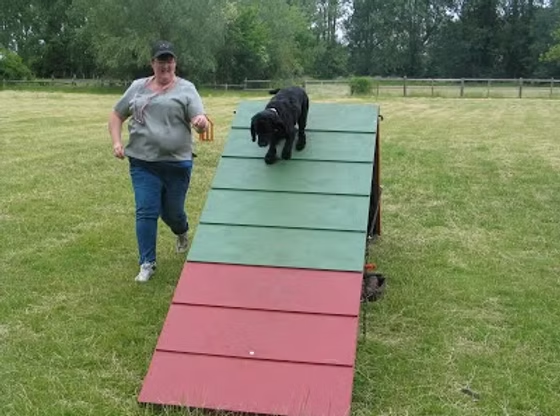
Carly contacted me for support with her Cocker Spaniel, Lady. By following a structured plan and consistently working on the skills we discussed, Lady has progressed from struggling with separation to settling calmly while Carly leaves the house.
Carly recently shared this update:
“I’ve been leaving Lady nearly every day now while I go to the shop or do something else I need to do, rather than just standing outside. She’s been fine—there has been no barking, crying or pacing.Next week, I’m going to try an hour and a half and then hopefully build it up to two hours.I can’t thank you enough for giving me all the tools I needed to help Lady. We started with the crate, but she now has the run of the house. She goes to her bed and stays there until she hears me come in, when she comes to greet me.”
Carly and Lady, Cocker Spaniel
Lady’s progress did not come from repeatedly picking up keys or putting on shoes. It came from understanding her individual needs, starting at the correct stage and gradually helping her feel safe and confident.
Every dog’s journey will be different, and no ethical trainer can promise an instant result. However, with professional guidance, realistic expectations and consistent work at home, positive and lasting change is possible.
You Don’t Have to Tackle It Alone
Separation anxiety can leave owners feeling trapped, guilty and unsure what to do next. It can affect work, relationships, social plans and even simple everyday tasks such as going to the shop.
Seeking support is not an admission that you have failed. It is an opportunity to better understand your dog and begin working through the problem with a clear, manageable plan.
When you work with me, we will look beyond the obvious symptoms and identify the skills your dog needs before longer absences are attempted. You will receive practical guidance tailored to your dog, your home and your daily routine, giving you the tools to continue the training confidently between sessions.
Progress takes patience, but as Carly and Lady’s story shows, those small, carefully planned steps can lead to meaningful changes for both dog and owner.
If your dog struggles to be left alone, please get in touch to discuss how I can support you.

Comments